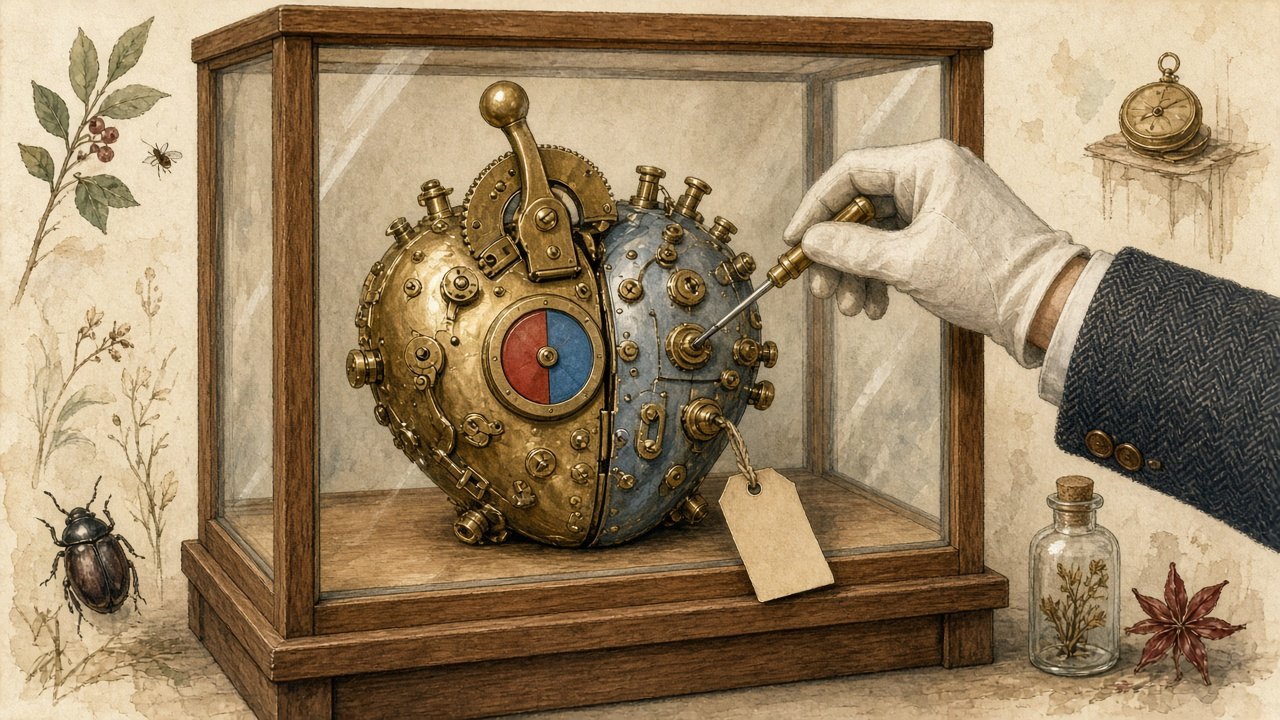
For most of human history, compassion was measured in inconvenient units: hours spent, meals cooked, nights sat up with someone who was sick. These units were costly, slow and impossible to post. This year, according to the fictional Lab of Conspicuous Compassion, Americans finally replaced them.
The Lab’s new Compassion Index measures how much a person cares by recording what they would like done with resources that belong to someone else. By that measure, the nation has never been more compassionate.
The method
Researchers surveyed members of both major herds about a range of human problems and asked a single question: “How much do you care?” Participants could show their concern in any way they liked. Then the researchers checked who would pay for it.
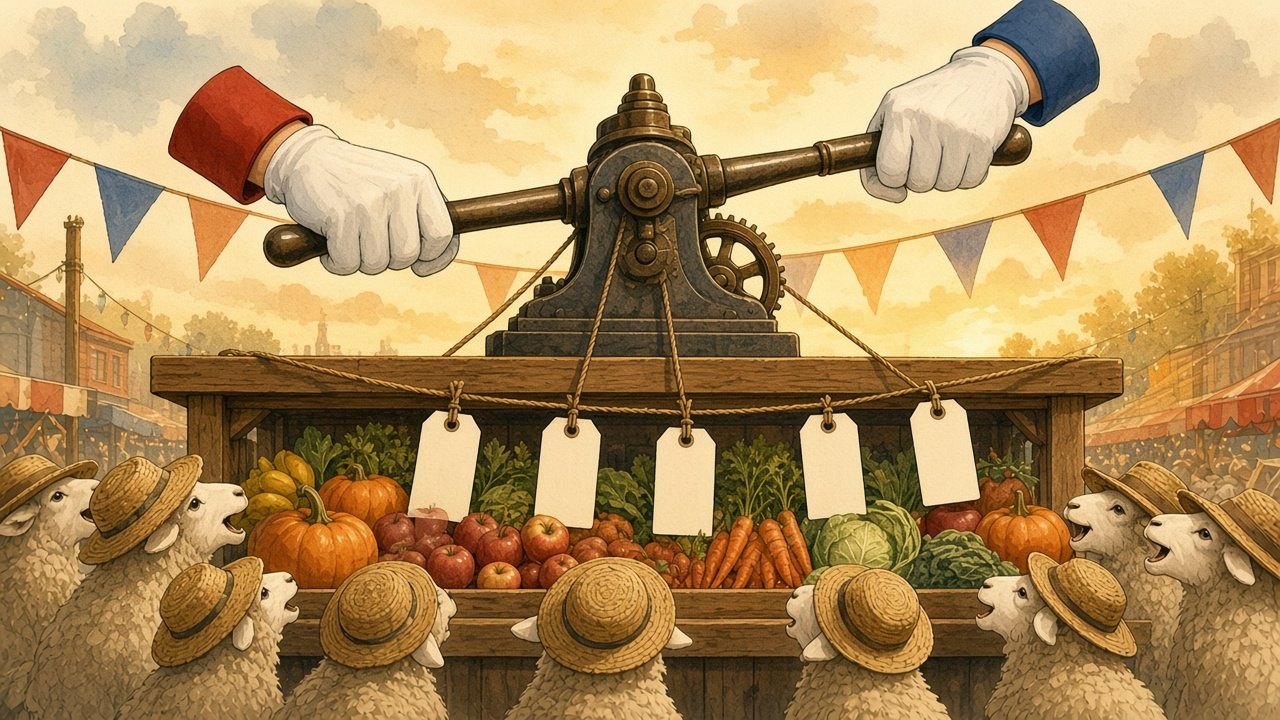
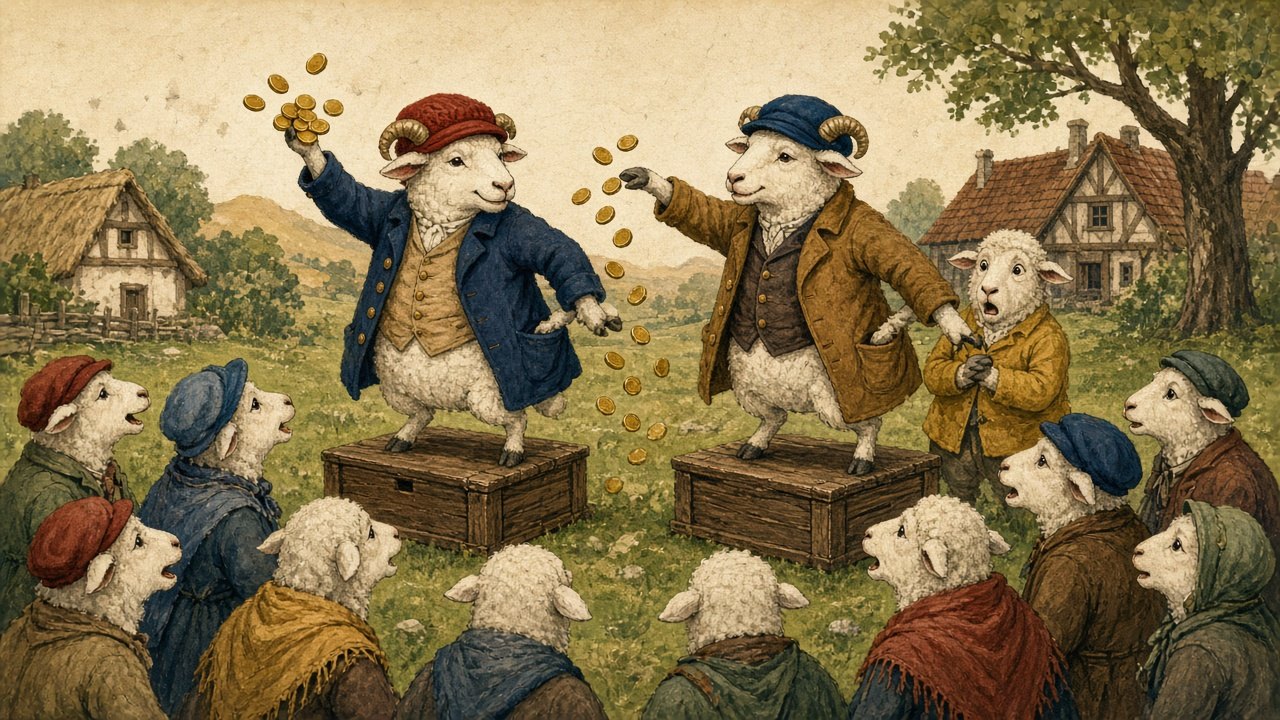
In the Blue-Capped herd, the dominant form of compassion was support for large programs, funded by taxes on people with more money than the participant, or by borrowing against people who are not yet born. Caring was measured by the size of the number. The bigger the program, the bigger the heart.
In the Red-Capped herd, the dominant form of compassion was the public expression of thoughts, prayers and sympathy, paired with strong support for programs that happened to benefit the participant’s own region or industry, funded, again, by somebody else. Caring was measured by the sincerity of the post.
“Caring was measured by the size of the number, or by the sincerity of the post. Both were free to the poster.”
The two herds despised each other’s methods. Each called the other’s compassion fake. Both were measured, by the Lab, at almost exactly zero personal cost.
The smart ones care the hardest
The most compassionate scores, the Lab found, came from the most educated participants, who were also the best at explaining why their own compassion did not need to cost them anything.
A Blue-Capped economist explained that personal charity was “a drop in the ocean,” that “only systemic solutions work,” and that he therefore supported the systemic solution, which would be paid for by a bracket slightly above his. A Red-Capped attorney explained that government programs “never work,” that real compassion is “local and personal,” and that he was very supportive of local, personal compassion, which he expected his church to perform.
Both arguments contained something true. Both arrived, by impressive reasoning, at the same address: someone else’s wallet, or someone else’s afternoon.
“Every tribe has a version of compassion that is free to its members,” said Dr. Phil Anthropy, the Lab’s fictional director. “It’s not hypocrisy, exactly. It’s outsourcing. Virtue has gone the way of manufacturing.”
For their own good
The Lab noticed a second pattern. Compassion that costs the giver nothing also tends to ask the recipient nothing. Both herds’ plans came with detailed ideas about what the people being helped should do, eat, believe or buy, and very few questions about what those people wanted.
The helpers were not cruel. They were certain. Certainty is easier to be generous with than money.
Who profits
The Lab followed the money and found it pooling, as money does, in the middle.
Each herd supports organizations whose fundraising depends on the problem persisting. They do good work; some do a great deal. But an organization that solves its problem has to lay people off, and so success is rarely defined. Both herds’ appeals followed the same structure: a heartbreaking story, a deadline and a small suggested donation, which buys the donor about a week of feeling that the matter is handled.
We are not mocking the people being helped, or the people who help them. We are mocking the arrangement in which the helping becomes a display, and the display becomes the point.
The index in the mirror
Readers may want to calculate their own index. Take the last thing you said you cared deeply about. Now list what caring about it has cost you: money, time, an awkward conversation, a changed habit. If the list is short, you are well within the national average. If the list is mostly other people’s money, the Lab has a certificate for you.
Ida
The Lab’s highest raw score did not come from any herd. It came from a fictional retired bus driver named Ida Quietgood, who was disqualified from the main study because she could not answer the survey. She was busy.
She drives two neighbors to dialysis, three days a week. She has not posted about it. She was not sure which herd she belonged to, and she did not seem very interested in the question. When asked how much she cared, she said she didn’t know how to measure it. Then she checked her watch, because it was Tuesday.
Satire This article is a work of comedy. Dr. Fieldnote, Hollis Longlens, the Lab of Conspicuous Compassion, the Compassion Index, Dr. Phil Anthropy, Ida and the Desk of Persuasion are fictional, and the index and its numbers are made up. The piece makes no claim about which group gives more. The illustration is AI-generated and shows no real person. National Sarcastic is not affiliated with National Geographic.