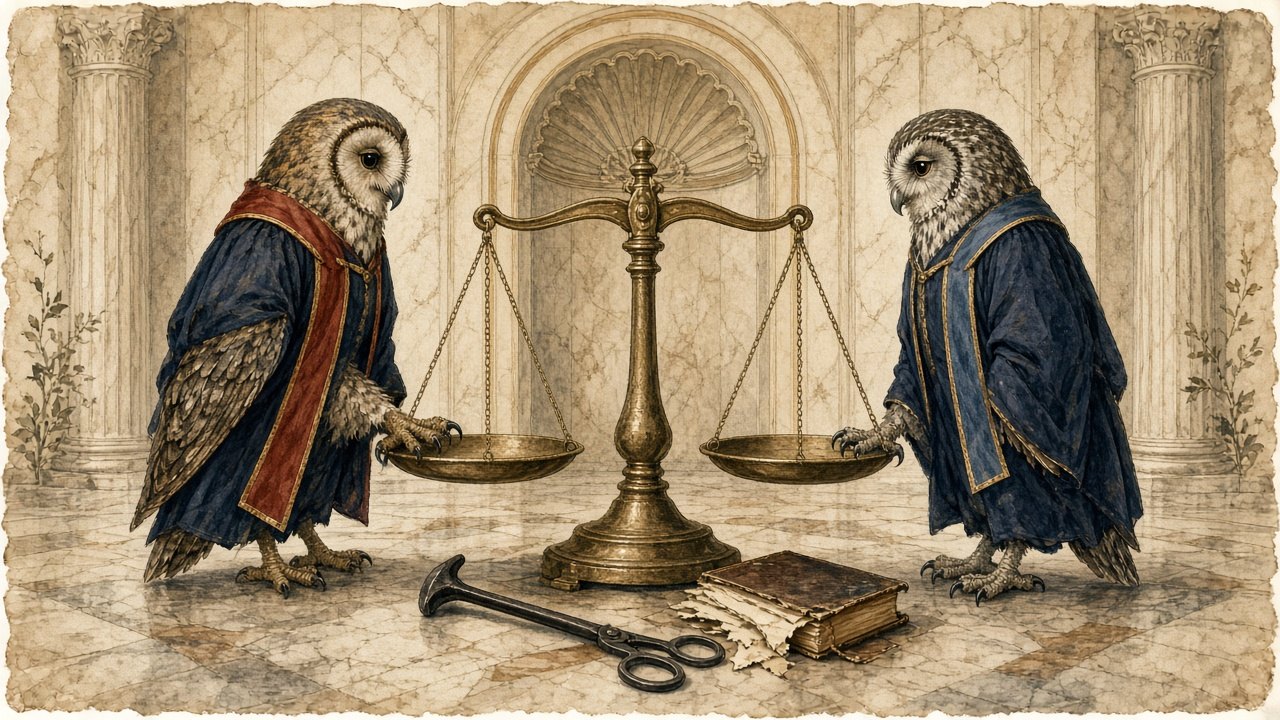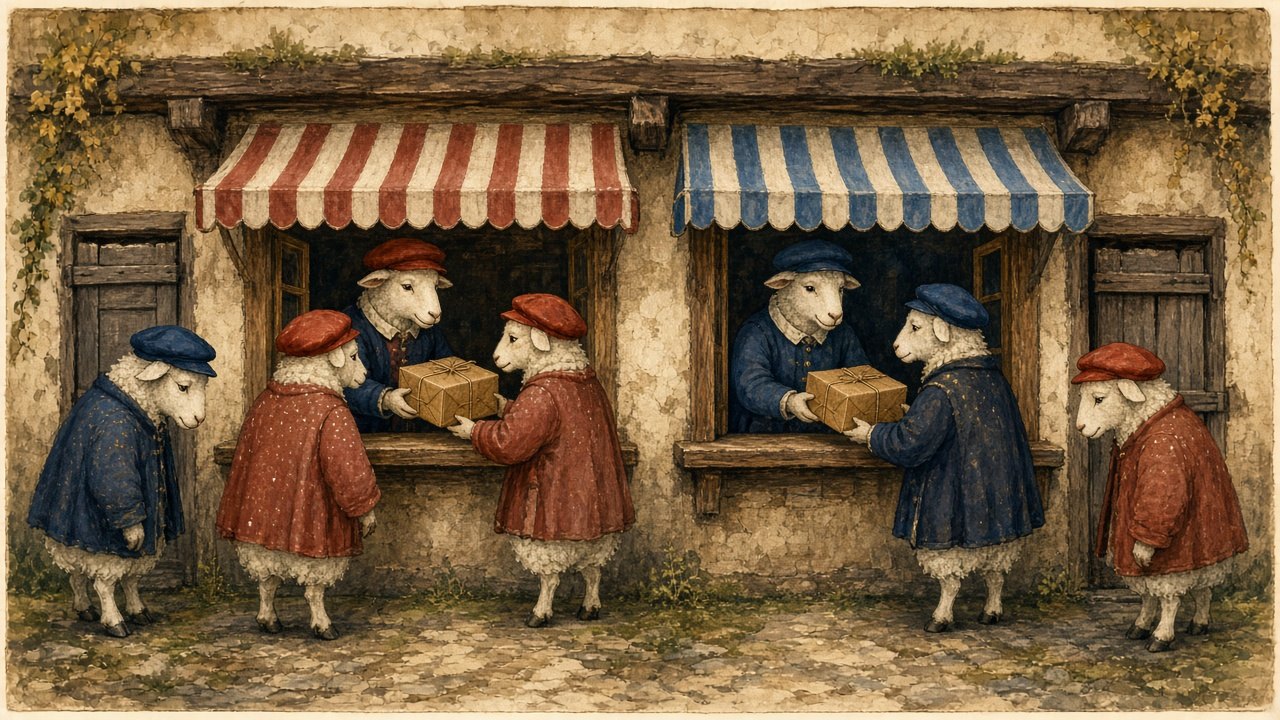
For this month’s Flashblack we open the archives of The Partisan’s Almanac, a publication that does not exist and has, for well over a century, predicted the weather of American public life with total confidence and zero accuracy. Its most consulted page is the Forgiveness Calendar, reproduced here.
According to the Almanac, forgiveness is a seasonal crop. It ripens only in certain conditions, chiefly when the person seeking it is on your side.
The calendar
The Almanac’s rule is simple. If a member of the other tribe is discovered to have said something terrible years ago, it is the Season of Accountability. No apology is sufficient. Any apology is insincere. Any refusal to apologize proves the point. If a member of your own tribe is discovered to have said the same terrible thing, it is the Season of Grace. He has grown. It was a different time. Who among us has not, once, at a lower point in life, posted something?
“No apology is sufficient. Any apology is insincere. Any refusal to apologize proves the point.”
Both tribes consult the calendar daily. Both tribes are certain it is the other tribe that keeps it.
A controlled experiment
To test the Almanac, our team constructed two fictional public figures. Archie Vedtweet is a popular commentator in the Red-Capped herd. Delia Tedpost is a popular commentator in the Blue-Capped herd. We gave each of them the same old post, an ugly joke from twelve years ago, and let it resurface on the same afternoon.
The Blue-Capped herd found Archie’s post by noon and declared it disqualifying. They said it revealed who he “really is,” that his apology was “the bare minimum” and that he should “use this time to reflect,” preferably for the rest of his career. The Red-Capped herd found Archie’s post by 12:15 and declared it a smear. They said he was “a fighter,” that the old joke showed he was “real” and “not some scripted politician,” and that the only scandal was who dug it up.
The reaction to Delia’s identical post was the same in every particular, with the caps reversed. Her own herd called her human. The other herd called her finished. The same sentence was a firing offense and a sign of authenticity, depending on the color of the hat.
The smart ones set the rules
The most effective enforcers of the calendar were not the angriest specimens. They were the most articulate.
In each herd, our team found thoughtful people with long essays on the nature of accountability, or the dangers of mob justice. Read separately, both essays were good. Read together, they had a curious feature: each herd’s accountability essay applied only to the other herd, and each herd’s mob-justice essay protected only its own. Several authors had written both, in different years, depending on who had posted what.
“People think hypocrisy requires bad faith,” said Pastor Grace Period, a fictional minister who has watched both herds from the same pulpit. “It doesn’t. It requires a principle that’s only consulted when it’s convenient. Forgiveness has become a club membership. Grace is a perk, like a parking spot.”
The guilt altar
There is also, the Almanac notes, a marketplace.
A public figure in trouble can be made to apologize, then apologize for the apology, then appear on a sympathetic show to be forgiven by the right people, then sell a book about the experience. The cycle produces guilt in the accused, relief in the forgiven, and commitment from the audience, who now feel they own a piece of his redemption. Shame alone makes people defensive. Shame followed by absolution, from your side only, makes them loyal.
Meanwhile the ordinary specimen, who has no show and no book, absorbs the main lesson. Never change sides. Your old posts are safe only in the herd you’re in.
The almanac in the mirror
Readers may wish to open their own almanacs. Think of the last public figure your herd refused to forgive, and the last one it decided had grown. Put their offenses side by side. Was it the offense that decided it, or the cap?
There is a question that neither herd likes to be asked, and we will ask it for them: what would full atonement actually look like? If your honest answer for the other side is “nothing would be enough,” then you are not describing a standard. You are describing a team.
A late frost
The Almanac’s final entry for this year, which our team discovered in the margin in someone else’s handwriting, is a short note about an unseasonal event. A woman in the Red-Capped herd and a man in the Blue-Capped herd, who had both once said regrettable things about each other’s tribes, met at a school board meeting and apologized to each other. Neither demanded more. Both accepted it.
The Almanac marked it as an anomaly. We prefer to think of it as early spring.
Satire This article is a work of comedy. Theodore Quagmire, Inés Telefoto, The Partisan’s Almanac, Archie Vedtweet, Delia Tedpost, their old posts, Pastor Grace Period and the Desk of Persuasion are fictional. No real person’s scandal, post or apology is described. The illustration is AI-generated and shows no real person. National Sarcastic is not affiliated with National Geographic.