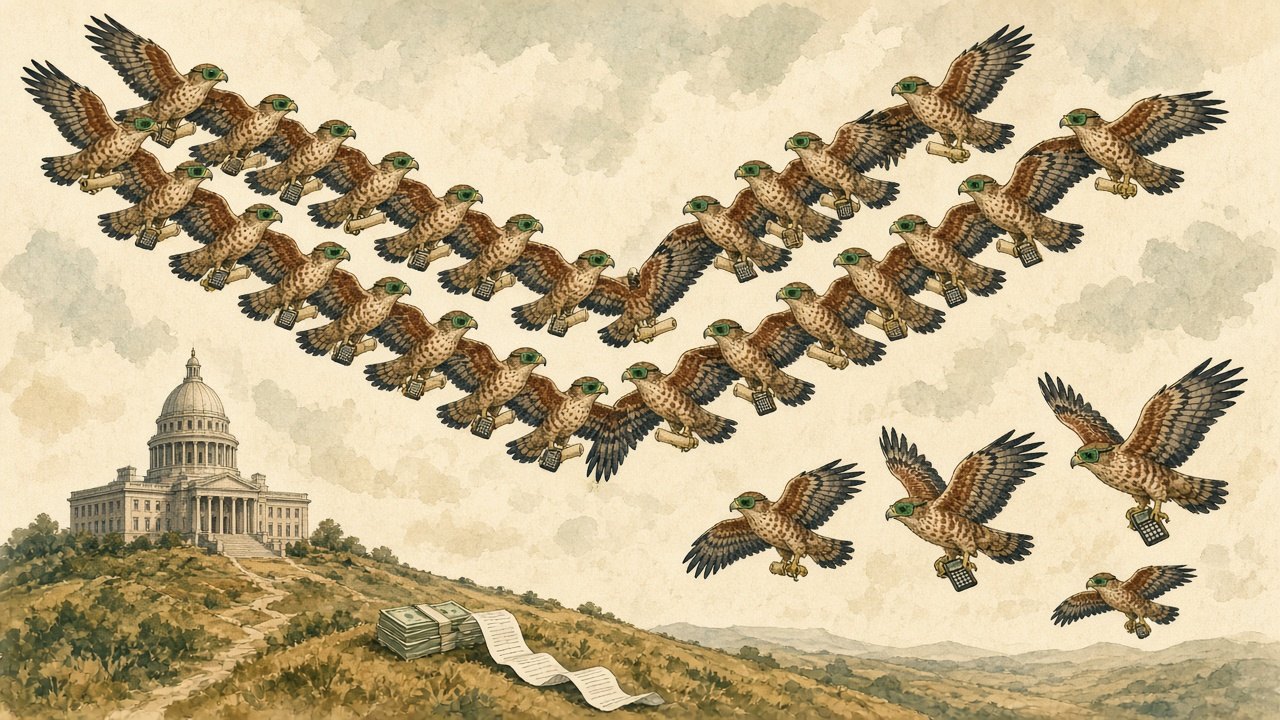
For centuries, explorers searched for the free lunch. Some said it was a myth. Others said it had been hunted to extinction by accountants. Our team can now confirm that it survives, in a protected habitat: the conference panel.
We attended the fictional Somebody Else’s Summit on Fiscal Fairness, a three-day gathering of the nation’s most credentialed thinkers. There were economists, professors, authors and a former official from each party. They disagreed on almost everything. On one point, though, they reached a consensus so complete that two of them hugged.
Someone else should pay for it.
The smart ones define “rich”
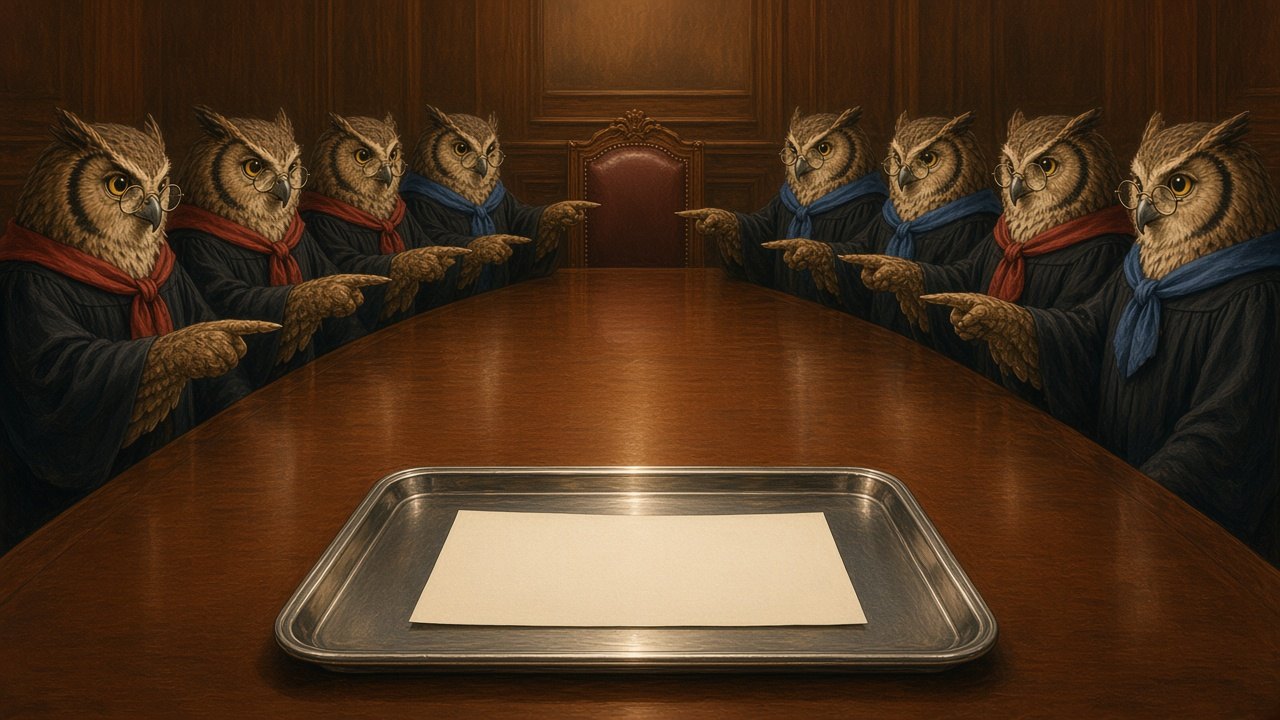
The first panel was about taxes. The Blue-Capped panelists made a forceful, well-researched case that the rich should pay more. Our researchers asked each of them, privately, to define “rich.”
Every answer was an income slightly above the speaker’s own.
A professor earning a comfortable salary defined rich as “anyone with investment income.” A consultant with investment income defined it as “anyone with a second home.” A man with a second home told us it meant “the people with planes.” We did not locate anyone who believed the line fell below themselves. It turns out “the rich” are a lot like the horizon. You can see them clearly, and they move whenever you walk toward them.
““The rich” are a lot like the horizon. You can see them clearly, and they move whenever you walk toward them.”
The smart ones define “waste”
The second panel was about spending. The Red-Capped panelists made a forceful, well-researched case that government spends too much and should cut. Our researchers asked each of them, privately, which spending to cut.
Every answer was a program the speaker did not use.
A retired executive wanted deep cuts, “but not Medicare, obviously; I paid into that.” A farmer-turned-author wanted to eliminate subsidies, except the agricultural ones, which were “a matter of national security.” A defense analyst wanted to cut everything but defense. We did not locate anyone who believed the waste was in his own mailbox. Waste, like the rich, is always one house over.
“Both groups are perfectly rational,” said Dr. Bill Elsewhere of the Institute for Deferred Payment, which does not exist. “They’ve solved the problem every civilization has struggled with: how to want things without paying for them. The solution is grammar. You keep the benefits in the first person and move the costs to the third.”
The duped, according to the smart
As in every herd, the smart ones had an explanation for why the other herd disagreed. The Blue-Capped panel explained that working people who oppose higher taxes have been “tricked into voting against their own interests” by billionaire-funded media. The Red-Capped panel explained that young people who want more spending have been “brainwashed” by professors who never had to make payroll.
Neither panel considered that the other herd might simply have different interests, or might have noticed that the bill always seems to land on them.
Who profits
Promising a free lunch is the most reliable business model in politics. “Tax the rich” polls well with everyone who doesn’t think he’s rich, which is almost everyone. “Cut spending” polls well with everyone who doesn’t think he’s spending, which is also almost everyone. A campaign can run on either slogan for decades, because the slogans never have to meet the bill. Advocacy groups on both sides raise money each year to fight for the version of the lunch their donors get to eat.
Who pays
Someone Else, of course. In practice, Someone Else turns out to be a combination of everybody, the next generation and whoever has the weakest lobby. Borrowing is the favorite option of both herds, since the people who will repay it are mostly too young to attend summits.
The panelist in the mirror
Here is a small exercise. Name one thing you’d like government to do more of. Now name who should pay for it, and make sure the answer includes you. Then name one thing you’d like government to do less of. Make sure it includes something you use.
If both answers came out easily, you are rare. If they didn’t, welcome to the panel.
We are not telling you what taxes or spending should be. That’s a real argument, and it deserves real numbers. It just can’t be won by a side that refuses to look at the bill.
The question from the floor
At the end of the final session, the moderator opened the floor. A man near the back named Hugh Pays (fictional), who had driven in from two counties over for reasons he didn’t explain, raised his hand.
“I’d pay a bit more,” he said, “if I knew what for, and if it worked.”
There was a long silence. Then both panels thanked him for his question, and moved on to lunch.
It was catered. The bill went to the empty chair.
Satire This article is a work of comedy. Dr. Fieldnote, Hollis Longlens, Dr. Bill Elsewhere, the Institute for Deferred Payment, Somebody Else’s Summit on Fiscal Fairness, Hugh and the Desk of Persuasion are fictional, and the field counts are made up. No real tax, budget or program figure is cited. The illustration is AI-generated and shows no real person. National Sarcastic is not affiliated with National Geographic.