It was billed as the unlikeliest event of the season. On a warm evening at the fictional Meddle County Fair, the Price Controls movement and the Tariffs movement, two tribes that have spent decades calling each other economically illiterate, shared a stage for the first time.
Organizers expected a debate. What our team witnessed was a wedding.
The smart ones explain the market to the market
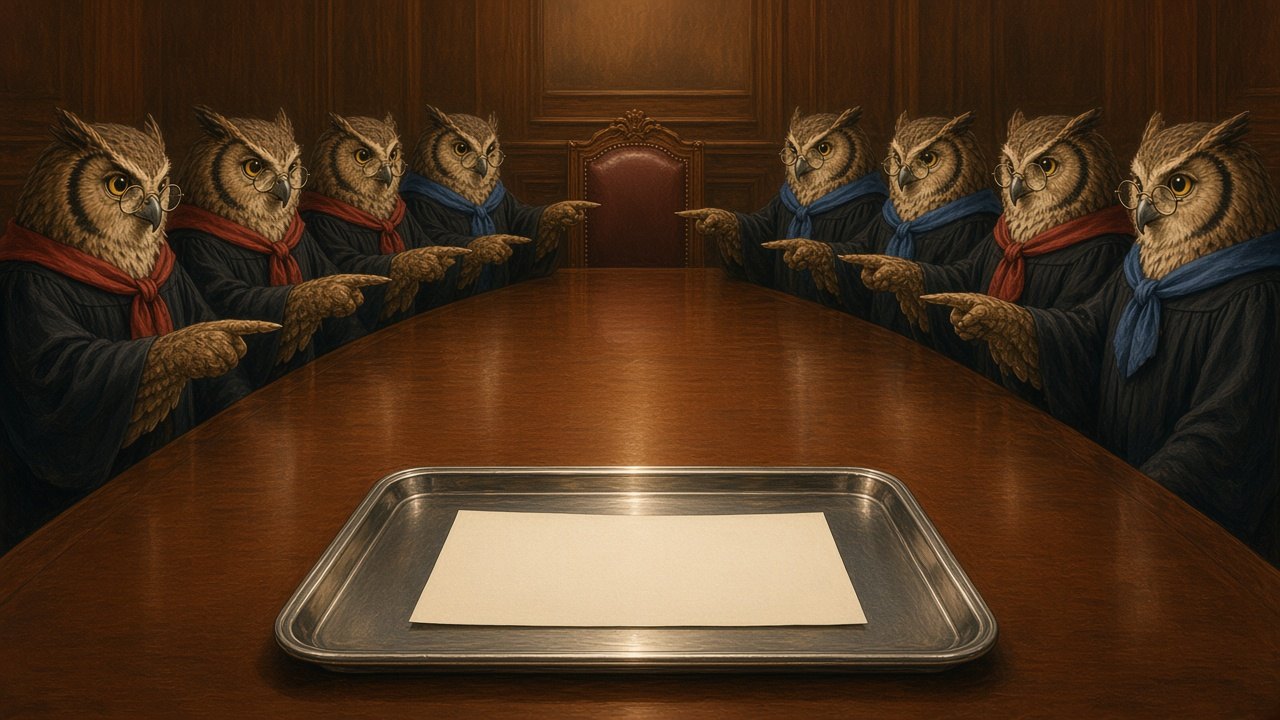
We began, as always, with the credentialed. Both movements arrived with economists, and both sets of economists were articulate, well funded and almost totally fluent in the other side’s mistakes.
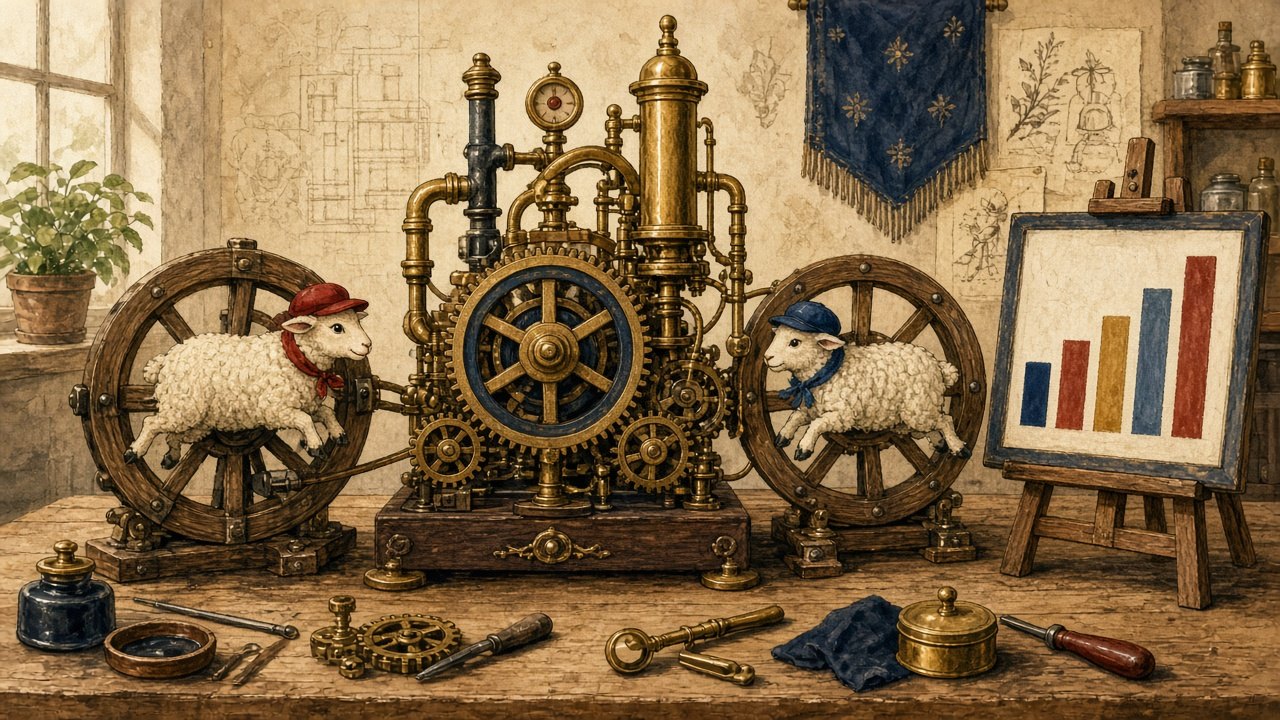
The Blue-Capped economists explained, with charts, that tariffs are a tax on consumers, that they raise prices and protect a few industries at everyone else’s expense, and that the market, left alone, sends useful signals. Then they unveiled a plan to cap rents, groceries and prescription prices, which they described as “correcting a market failure.”
The Red-Capped economists explained, with different charts, that rent caps cause shortages, that price controls have failed everywhere they’ve been tried, and that the market, left alone, sends useful signals. Then they unveiled a plan for tariffs on forty-one categories of imports, which they described as “protecting a strategic interest.”
“Every economist on stage believed in the invisible hand. They just wanted it to wear their glove.”
“The market is a wonderful thing,” said Dr. Felicity Handwave of the Institute for Visible Hands, which does not exist. “It tells you exactly what things cost. That’s why you have to supervise it. Otherwise it will tell you things you didn’t vote for.”
The joint platform
By the second hour, the two movements had drafted a joint platform, which our researchers transcribed in full. It had one plank: The market should do whatever politicians feel like, unless the other party is in charge, in which case it should be free.
The crowd loved it. We counted three standing ovations and a fourth that was mostly people stretching.
The speeches were mirror images. The Blue speaker promised that rent would be “affordable for everyone,” and did not say who would build the next apartment at the capped price. The Red speaker promised that factories would “come roaring home,” and did not say who would pay more for the things the factories made. Both speakers used the word “fair” eleven times. Neither one used the word “shortage” or the phrase “who pays.”
Two hands on one lever
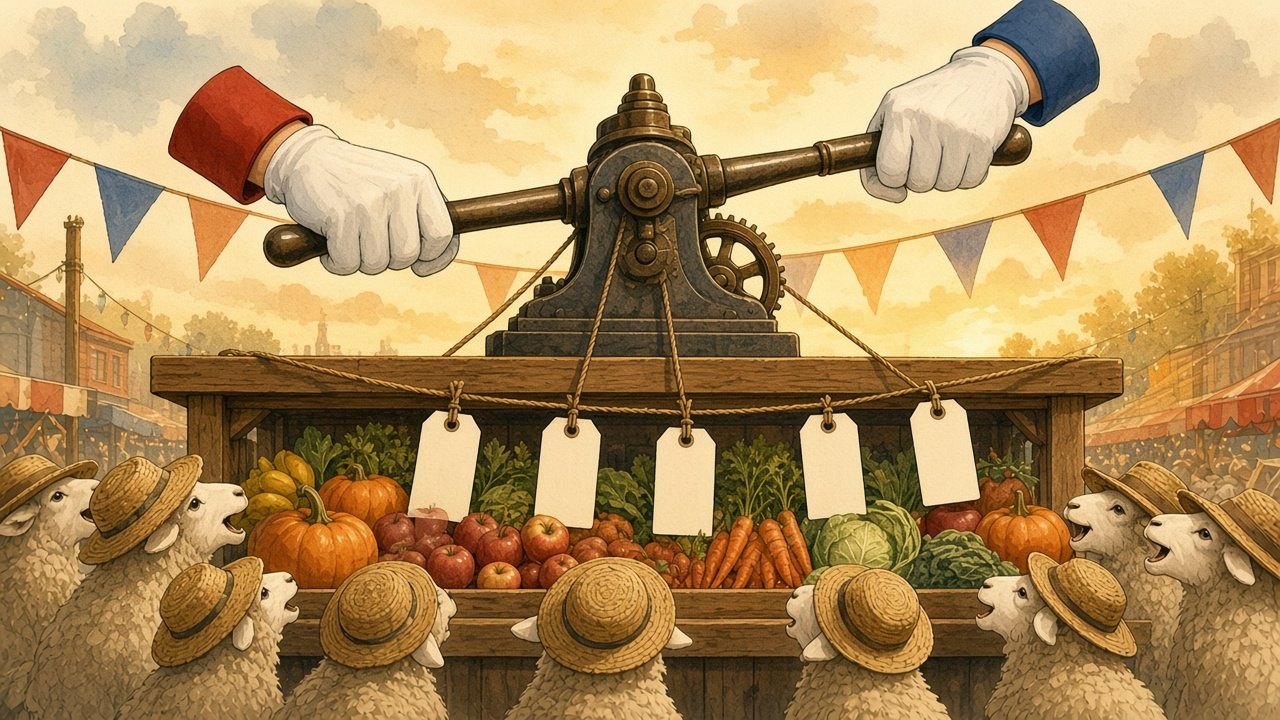
Here is what the two movements share. Each looks at a price it dislikes and concludes that the price is a moral failure rather than a piece of information. Each believes the person who should set the price instead is a politician, preferably its own. And each tribe can explain, in precise technical detail, why the other tribe’s lever causes shortages, smuggling, black markets, retaliation, waiting lists and higher costs hidden somewhere else.
They are both describing the same lever. They have simply agreed to look only at the other end of it.
There are honest arguments for some rent rules and for some tariffs. Serious people make them. But the serious version always starts with what the lever actually does, to whom, and for how long. It never starts with who is pulling it.
Who profits
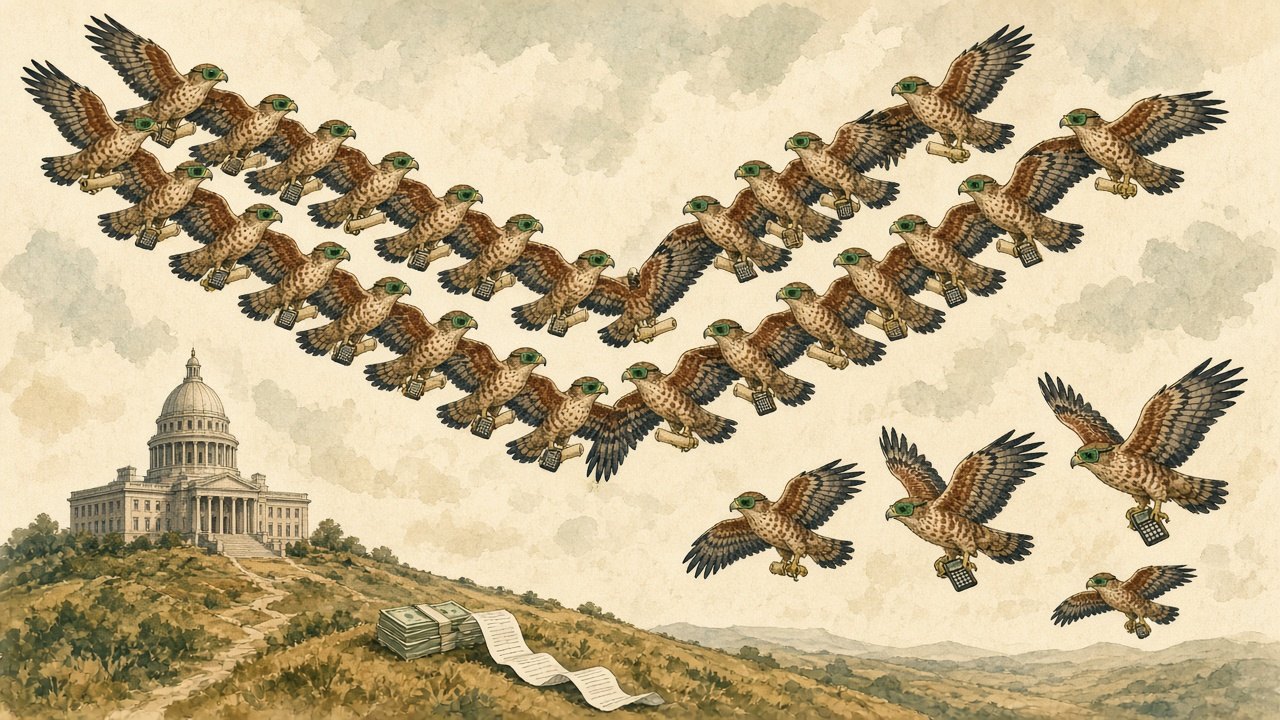
Every lever needs an exemption desk. When prices are capped, someone decides who gets an exception. When imports are taxed, someone decides which industries get a waiver. Those decisions are worth a great deal of money, and money arrives where decisions are made.
By the end of the evening, our team had counted more lobbyists at the fair than goats. The goats, to their credit, were there for the fair.
Who pays
The person who pays is not on stage. It’s the renter who can’t find a vacant apartment at the capped price, and the family paying a little more for every imported thing in the house. It’s the small shop that can’t afford the lobbyist. Each cost is spread thin and arrives later, which is exactly why a rally can promise the benefit loudly and keep the bill quiet.
The lever in the mirror
You probably found one of those speeches obviously foolish. Which one? Now ask yourself whether you used the same reasoning to reject it that the other side uses to reject yours.
The question is not whether you like markets. The question is whether you like them only when they agree with you. If your answer to “Should politicians set this price?” depends on which politicians, you’re not for or against the market. You’re for the lever.
The fruit stand
After the rally, we walked past a fruit stand at the edge of the fairground. Marty Markup and Margie Markdown (fictional) were rewriting their price tags by hand, because the peaches had come in early and there were too many of them.
We asked whether they were for price controls or tariffs. Margie looked at the peaches. “We’re for selling these before Sunday,” she said.
Marty lowered the price a little. A line formed. Nobody gave a speech.
Satire This article is a work of comedy. Dr. Fieldnote, Hollis Longlens, Dr. Felicity Handwave, the Institute for Visible Hands, the Meddle County Fair, Marty Markup and Margie Markdown, and the Desk of Persuasion are fictional, and the field counts are made up. No real policy, rally or figure is cited. The illustration is AI-generated and shows no real person. National Sarcastic is not affiliated with National Geographic.