Every few years, in the weeks after a national election, one of the great migrations of the natural world takes place. It is not the wildebeest. It is not the monarch butterfly. It is the sudden, silent departure of the deficit hawk.
For two seasons our team kept watch from a blind on a parking-garage roof within sight of the Capitol dome. What we saw changed how we understand fiscal responsibility, and birds.
A creature of principle, in season
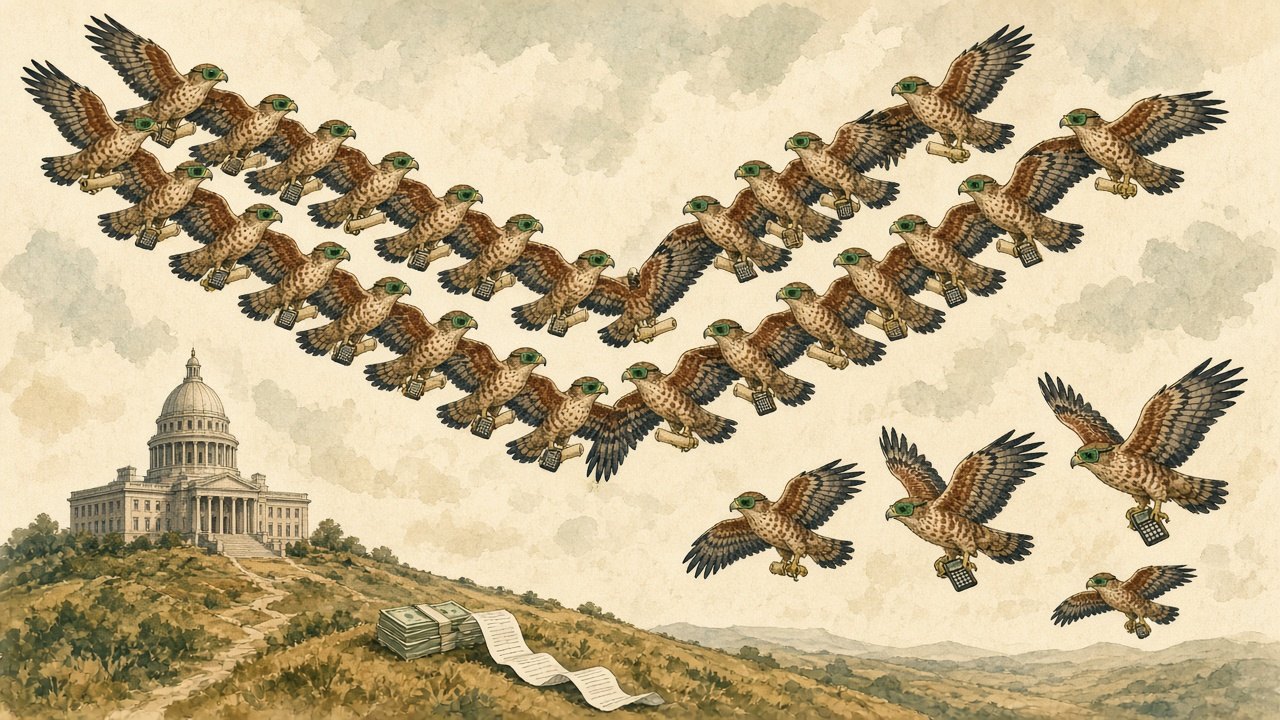
The deficit hawk, Accipiter austerus, is unmistakable in its breeding plumage. It wears a green eyeshade. It carries a pocket calculator in one talon and a rolled-up chart in the other. Its call, a piercing “Who’s going to pay for this?”, can be heard over a crowded cable panel at a distance of several miles.
In opposition, the hawk is tireless. It circles the Capitol at dawn. It perches on morning-show ledges, staring down at spending bills in personal grief. It speaks often of its grandchildren, whom it has never consulted, and of a debt clock, which it watches the way other birds watch a field mouse.
Then its party wins power. And within days, the hawk is gone.
The smart birds fly first
What startled us was who leads the formation.
The first to depart are invariably the most sophisticated. A lesser hawk simply goes quiet. A credentialed hawk produces a paper. We recorded economists, think-tank fellows and at least one former budget official, from both herds, each explaining that the new spending was different in kind. When the other party spent, it was “reckless,” “mortgaging the future,” “a spending spree.” When their own party spent, it was “an investment,” “pro-growth,” and, a favorite, “a deficit that will largely pay for itself.”
“A lesser hawk simply goes quiet. A credentialed hawk produces a paper.”
“They’re not lying, exactly,” said Dr. Dee Fisset, an avian economist at the Institute for Advanced Shrugging, which does not exist. “Each of them believes the model. The model just happens to be built by people who already knew which answer they wanted. You’d be amazed how often a spreadsheet agrees with whoever is holding it.”
Each herd’s favorite deficit
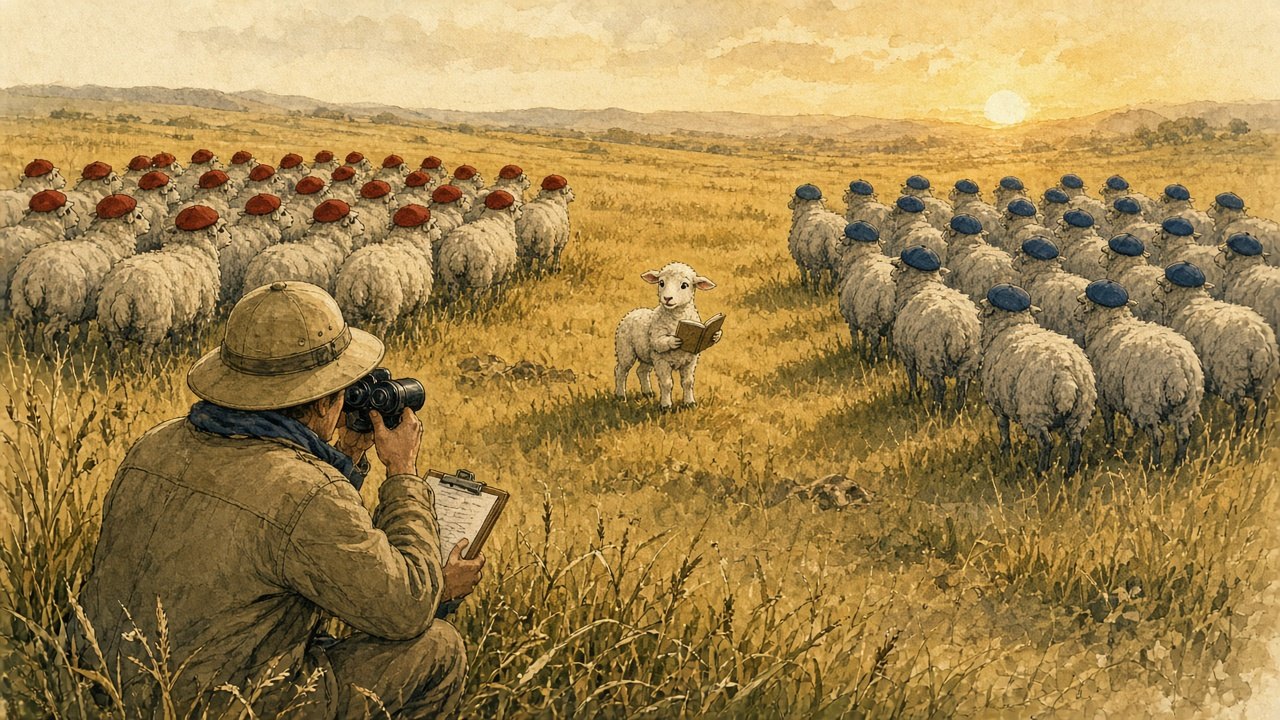
The migration is perfectly symmetrical. Our observers watched the Red-Capped hawks in opposition crying out about social programs, then falling silent once their own tax plans and favored budgets went to the floor. We watched the Blue-Capped hawks in opposition crying out about tax cuts and the price of other priorities, then falling silent once their own spending bills arrived. Each herd, it turns out, has a favorite deficit. It is always the one it gets to spend.
The returning birds are just as punctual. When a party loses power, its hawks fly back north in a matter of weeks, eyeshades freshly starched, and resume their posts on the ledges as if they had never been away. Asked where they had been, one returning hawk told our team it had “always been concerned about this.”
Who pays, and when
It would be comforting to call the hawk a mere hypocrite. We do not recommend it. The hawk’s call is a tool. In opposition, it is used to slow the other side down. In power, it is set aside because it would slow your own side down. The cry about grandchildren is real only when the grandchildren are a useful prop, and the grandchildren have no vote, no lobby and no seat at the table. They are, conveniently, the only party to the deal who cannot object.
So the question “Who pays?” never quite gets answered. It just gets reassigned, every few years, to whoever happens to be out of power.
The hawk in the mirror
You, the reader, have presumably been watching the other party’s hawks this whole time. That is how this works. Now try a small exercise. Think back to the last time your side held power. How worried were you about the debt? Did you write a letter? Did you even notice? Now think of the years your side was out. Did the worry come back on its own, like a migrating bird that always seems to know the way home?
We are not telling you how much debt is too much. Reasonable people disagree, and the honest answer depends on what the money is for. That is exactly why the honest answer cannot depend on who is spending it.
The resident hawk
On our final morning in the blind, we spotted something our field guides had listed only as “possibly mythical”: a resident hawk. It had not migrated. It sat alone on a ledge, eyeshade slightly crooked, calculator in hand, criticizing a spending bill from its own party in the same tone it had used on the other party’s bill two years earlier.
Its own herd called it disloyal. The other herd quoted it gleefully for one news cycle, then forgot it existed.
It kept doing its math anyway. We could not hear the numbers from the roof. But for the first time in two seasons, the call sounded like a question someone actually wanted answered.
Satire This article is a work of comedy. Dr. Fieldnote, Hollis Longlens, Dr. Dee Fisset, the Institute for Advanced Shrugging, the Resident Hawk and the Desk of Persuasion are fictional, and the field counts are made up. No real budget figure is cited. The illustration is AI-generated and shows no real person. National Sarcastic is not affiliated with National Geographic.